The Mursi Tribe: Guardians of Ethiopia's Cultural Heritage
The Mursi Tribe of Ethiopia stands as one of the most fascinating and culturally distinct ethnic groups in Africa. Nestled in the remote and arid lands of the Lower Omo Valley in southwestern Ethiopia, the Mursi people have maintained their unique traditions and way of life for generations. Known for their striking appearance, particularly the practice of wearing lip plates, and their semi-nomadic pastoralist lifestyle, the Mursi have captured the attention and imagination of anthropologists, travelers, and cultural enthusiasts from around the world.
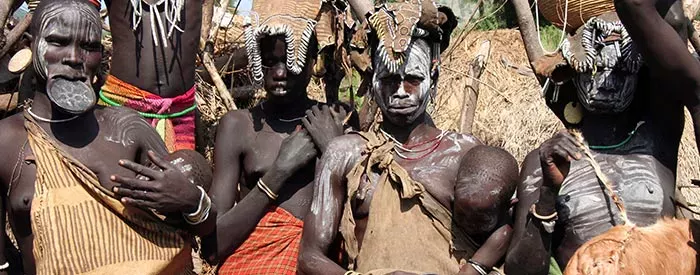
In this comprehensive guide, we will explore the rich cultural heritage of the Mursi Tribe, from their traditional practices and social structure to the challenges they face in the modern world. We'll examine how this resilient community of approximately 10,000 people continues to preserve their identity while adapting to changing times.
Origins and Geographic Location
The Mursi Tribe inhabits an inaccessible area between the Mago and Omo rivers in the Lower Omo Valley of southern Ethiopia. This remote location has allowed them to maintain their cultural practices with minimal outside interference for centuries. The terrain is harsh and arid, characterized by seasonal variations that have shaped the Mursi's semi-nomadic lifestyle.
The Mursi language belongs to the Nilo-Saharan language family, and linguistically and culturally, they share similarities with the neighboring Suri tribe. In fact, the Mursi and Suri consider themselves to be one nation, with mixed marriages between the two groups being common.
Traditional Lifestyle and Economy
Pastoralism: The Heart of Mursi Culture
Cattle represent the most valuable treasure in Mursi society. The importance of cattle extends far beyond mere economic value - it permeates every aspect of Mursi life and culture. Names are given according to the color of one's favorite cow, demonstrating the deep connection between the people and their livestock.
The Mursi boast among local tribes for having the largest number of cattle, making them one of the wealthiest communities in the region. All significant social relationships are cemented through the exchange of cattle. Marriage dowries traditionally consist of 30 to 40 cows, though in recent times, this may also include a rifle. This practice means that the birth of a daughter is considered a blessing, as she will contribute to her father's wealth through her marriage. Male descendants, however, are equally valued for their role in caring for the family's herds.
Agricultural Development
While the Mursi traditionally focused on pastoralism, in recent years they have increasingly specialized in agriculture. The tribe now cultivates various crops including:
- Sorghum (a staple grain)
- Corn (maize)
- Beans
- Chickpeas
- Tobacco
Additionally, the Mursi practice beekeeping, which provides both honey for consumption and trade and beeswax for various uses.
Diet and Nutrition
The foundation of the Mursi diet is a porridge-like dish prepared from sorghum and corn. This staple food is often mixed with milk and blood, which is taken directly from a small wound made on the neck of a cow. This practice allows the Mursi to obtain nutrition from their cattle without slaughtering them, preserving their valuable livestock.
Meat is consumed rarely, typically reserved for festive occasions or during times of drought when cattle may need to be slaughtered. This dietary practice reflects both the practical value of keeping cattle alive and the cultural significance of the animals.
Distinctive Cultural Practices
Body Modification and Appearance
The Mursi Tribe is internationally recognized for its distinctive body modification practices. Mursi people are generally tall and thin in stature. Traditional dress has evolved over time - while men once went completely naked, today they typically wear a blanket draped over one shoulder. Women tie goat skin at the hips or, more commonly in recent times, wear a blanket. Both men and women shave their heads and cut decorative patterns into their hair.
The Lip Plate Tradition
Perhaps the most famous Mursi tradition is the wearing of clay or wooden plates in the lower lip, practiced by women. This custom follows a specific process:
- At age 14, a girl has four lower teeth removed
- At age 15, her lower lip is incised
- A small plate is inserted, which is gradually replaced by larger plates over time
- Boys also have two lower teeth removed as part of their coming-of-age
The origin and purpose of lip plates have been subject to various theories. One popular but now-disputed theory, promoted by National Geographic, suggested that the practice was meant to make women unattractive to slave traders. Today, it is widely believed that the practice is actually a form of beautification and a marker of sexual maturity.
The size of the plate is sometimes said to influence a woman's value and thus the number of cattle paid to her father as a bride price, though this remains a subject of debate among anthropologists. The Ethiopian government has attempted to discourage this practice, suggesting that plates be worn in the earlobes instead, but the tradition continues as an important marker of Mursi identity.
Scarification
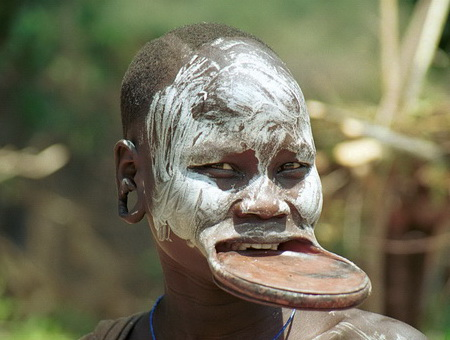
The Mursi also practice scarification as a form of body art and cultural identification. The process involves cutting the skin and rubbing ash into the wounds, which causes the scars to heal slowly and become more prominent. These scars serve specific purposes:
- Women bear on their stomachs the symbol of the clan from which they originate
- On their shoulders, women carry a pattern identical to the one branded on cows owned by their husbands
- These markings serve as permanent identifiers of family and clan relationships
Adornment and Accessories
While the Mursi do not wear extensive jewelry compared to some other African tribes, they do use several forms of adornment:
- Metal bands, bracelets, and anklets for everyday wear
- During ceremonies, women decorate themselves with animal skins
- Elaborate headgear made from animal tusks and other materials
- Men sometimes wear bracelets made from elephant bones and hair
Men carry a large stick called a "dongen," which serves as both a defensive weapon and a tool. In recent times, this traditional weapon has increasingly been replaced by the AK-47 rifle, which has become ubiquitous in this part of Ethiopia.
Social Structure and Organization
Clan System
The Mursi population of approximately 10,000 people is divided into 18 distinct clans. This clan structure forms the foundation of Mursi social organization, determining marriage alliances, resource sharing, and social relationships.
Division of Labor
Mursi society maintains a hierarchical social structure with clearly defined roles:
- Men focus primarily on herding cattle, goats, and sheep, as well as protecting the community
- Women are responsible for household tasks, agriculture, and raising children
- Elders play crucial roles in decision-making, dispute resolution, and preserving cultural knowledge
Cultural Ceremonies and Rites of Passage
The Mursi observe various cultural ceremonies and rites of passage that mark important transitions in life. These include coming-of-age ceremonies (such as the tooth removal and lip cutting mentioned earlier), marriage ceremonies involving cattle exchange, and various seasonal celebrations related to agriculture and pastoralism.
Challenges in the Modern World
External Influences and Tourism
The Mursi Tribe now faces unprecedented challenges as the modern world encroaches on their traditional territory. Tourism has brought both benefits and drawbacks to the community:
Benefits:
- Economic opportunities through photography fees and craft sales
- Increased global awareness of Mursi culture
- Some infrastructure development in the region
Drawbacks:
- Exploitation and commodification of cultural practices
- Disruption of traditional daily life
- Creation of dependency on tourism income
- Erosion of cultural authenticity in some tourist-focused areas
Environmental Challenges
The Mursi face increasing environmental pressures:
- Climate change affecting rainfall patterns and drought frequency
- Resource scarcity, particularly water and grazing land
- Competition with neighboring tribes for limited resources
- Government policies regarding land use and conservation
Cultural Preservation vs. Modernization
The Ethiopian government and various organizations have sought to modernize Mursi practices, particularly regarding body modification. However, these efforts often create tension between cultural preservation and development goals. The Mursi must navigate maintaining their identity while adapting to contemporary realities.
Breaking Stereotypes: The Real Mursi People
Beyond the "Aggressive" Label
The Mursi people are often portrayed as extremely aggressive, giving them a poor reputation among some tourists. However, this characterization is largely false and stems from superficial interactions. When visitors take the time to engage meaningfully with the Mursi, they prove to be inquisitive, friendly, and hospitable people.
Their defensive stance and wariness toward outsiders stems from the harsh environment in which they live and the need to protect their resources and community. This is a survival mechanism, not inherent aggression. Understanding this context is essential for respectful engagement with the Mursi people.
Shared Humanity and Cultural Richness
Beyond their distinctive practices, the Mursi are fundamentally a people with hopes, dreams, families, and a rich cultural heritage that deserves respect and understanding. They face many of the same universal human concerns as people everywhere - providing for their families, maintaining their health, preserving their culture for future generations, and seeking meaning and connection in their lives.
Responsible Tourism and Cultural Sensitivity
For those interested in experiencing Mursi culture firsthand, responsible tourism practices are essential:
Guidelines for Respectful Interaction
- Always ask permission before taking photographs, and be prepared to pay a fair fee
- Respect personal boundaries and cultural norms
- Use local guides from the community when possible
- Purchase crafts directly from artisans to support the local economy
- Avoid making promises you cannot keep
- Learn basic greetings in the Mursi language
- Dress modestly and appropriately
- Avoid reinforcing stereotypes or treating people as exotic curiosities
Supporting the Community
Tourism can be a force for good when conducted responsibly:
- Support community-led tourism initiatives
- Purchase authentic crafts and goods
- Respect traditional knowledge and practices
- Advocate for fair compensation and ethical tourism practices
- Share accurate, respectful information about the Mursi with others
The Role of Women in Mursi Society
Women play vital roles in Mursi society, though they face specific challenges. Initiatives promoting gender equality and women's empowerment within the tribe are gradually taking root, focusing on:
- Improving access to education for girls
- Involving women in community decision-making processes
- Supporting women's economic activities
- Providing healthcare services tailored to women's needs
Education and Healthcare Challenges
The Mursi Tribe faces significant obstacles in accessing education and healthcare:
Education
- Limited school infrastructure in remote areas
- Cultural practices that may conflict with regular school attendance
- Language barriers (instruction often in Amharic rather than the Mursi language)
- Economic pressures that prioritize herding and agriculture over formal education
Healthcare
- Distance to medical facilities
- Limited understanding of modern medical practices
- Preference for traditional healing methods
- Lack of healthcare providers familiar with Mursi culture and language
Efforts to improve access to these essential services must balance modern needs with cultural sensitivity and community preferences.
Conservation and Environmental Stewardship
The Mursi Tribe's traditional knowledge of their environment makes them natural stewards of the Lower Omo Valley ecosystem. Conservation efforts should:
- Involve the Mursi in land management decisions
- Recognize traditional ecological knowledge
- Balance conservation goals with community needs
- Support sustainable resource use practices
- Protect the biodiversity on which the Mursi depend
The establishment of Mago National Park in the region has created both opportunities and challenges for the Mursi, who have traditionally used park lands for grazing and settlement.
Cultural Identity in a Globalizing World
As globalization accelerates, the Mursi Tribe faces the challenge of maintaining their cultural identity while engaging with the wider world. This involves:
- Preserving traditional practices while selectively adopting beneficial innovations
- Educating younger generations about their cultural heritage
- Asserting their rights to self-determination and cultural autonomy
- Finding economic opportunities that don't compromise cultural values
- Representing themselves in media and cultural exchanges
The Mursi Contribution to Ethiopia's Cultural Tapestry
The Mursi Tribe represents just one thread in Ethiopia's incredibly diverse cultural tapestry. Ethiopia is home to over 80 different ethnic groups, each with unique traditions, languages, and customs. The Mursi's cultural heritage contributes significantly to:
- Ethiopia's national identity as a culturally diverse nation
- The country's appeal as a destination for cultural tourism
- Academic understanding of human cultural diversity
- The global conversation about indigenous rights and cultural preservation
Conclusion
The Mursi Tribe stands as a testament to human cultural diversity and resilience. Their distinctive traditions, from lip plates to scarification, from cattle-centered economics to clan-based social structure, represent a unique way of life that has persisted in one of the most challenging environments on Earth.
As the modern world increasingly encroaches on the Lower Omo Valley, the Mursi face unprecedented challenges to their traditional way of life. Yet they continue to adapt while maintaining their core cultural identity. The lip plates that once may have protected against slavers now symbolize cultural pride and identity. The cattle that have always been central to their economy now share space with agriculture and tourism.
Understanding and respecting the Mursi Tribe requires moving beyond stereotypes and superficial observations. These are not aggressive people or living museum exhibits, but a vibrant community navigating the complexities of the 21st century while honoring their ancestors and traditions.
For travelers, researchers, and cultural enthusiasts, the Mursi offer an opportunity to witness and learn from a radically different way of life - one that challenges assumptions about beauty, value, and what it means to live well. However, this opportunity comes with responsibility: to engage respectfully, to support community autonomy, and to recognize the Mursi as the experts on their own culture.
The future of the Mursi Tribe will likely involve continued adaptation and change. The key question is whether this change will occur on their own terms, with their values and priorities respected, or whether it will be imposed from outside. By promoting responsible tourism, supporting community-led initiatives, and advocating for Mursi rights and autonomy, we can help ensure that this remarkable culture continues to thrive for generations to come.
As we conclude this exploration of Mursi culture, we are reminded that cultural diversity is one of humanity's greatest treasures. The Mursi Tribe, with their unique practices and deep connection to their land, represent an irreplaceable part of this global heritage. Their survival and flourishing is not just important for Ethiopia, but for all of humanity.
Frequently Asked Questions
1. What is the significance of lip plates in Mursi culture? Lip plates are a symbol of beauty and mark the transition to womanhood in Mursi society. They represent sexual maturity and cultural identity, and may influence the bride price paid for a woman.
2. How many people belong to the Mursi Tribe? The Mursi population is estimated at approximately 10,000 people, divided into 18 distinct clans.
3. What is the main source of livelihood for the Mursi? Traditionally pastoralists, the Mursi primarily raise cattle, goats, and sheep. In recent years, they have increasingly engaged in agriculture, growing crops like sorghum, corn, and beans.
4. Are the Mursi people really aggressive? This is largely a stereotype. While the Mursi are protective of their resources and community due to their harsh living environment, they are generally friendly and hospitable when approached respectfully.
5. How can tourists visit the Mursi responsibly? Visitors should always ask permission before photographing, pay fair fees, use local guides, respect cultural norms, avoid making promises they can't keep, and support community-led tourism initiatives.
6. What challenges do the Mursi face today? The Mursi face challenges including climate change, resource scarcity, pressure to abandon traditional practices, limited access to education and healthcare, and the impacts of tourism and globalization.
7. What language do the Mursi speak? The Mursi language belongs to the Nilo-Saharan language family and is related to the language of the neighboring Suri tribe.
8. Where can I learn more about visiting the Omo Valley? Reputable tour operators specializing in Ethiopian cultural tourism can provide ethical visits to Mursi communities in the Lower Omo Valley, often including visits to other tribes in the region such as the Hamer and Daasanech.
This article was originally published on January 22, 2026.